A worker joins on Monday, moves to another client site the following week, works overtime near month-end and leaves before the next pay cycle. If each change lives in a different sheet, payroll becomes a search for the latest version of the truth.
For a manpower contractor, payroll is not a standalone calculation. It depends on the worker record, the client site, attendance, wage structure and rules in effect for that period. Good software makes those connections visible before a wage slip or register is produced.
Follow one worker through the month
Begin with a complete employee record: joining date, employment status, wage type, statutory identifiers where applicable, bank details and documents. Link the person to the correct client site. When an assignment changes, preserve the history instead of overwriting the old context.
Next, capture attendance in a form that payroll can use. A monthly total is useful, but daily marks explain how that total arose: present days, absences, leave, holidays, weekly offs and overtime. If a client sends Excel attendance, import it into the same workflow and review it before the pay run.
Then calculate wages using the right structure. Monthly-rated and daily-rated workers can need different bases. Overtime, allowances, advances, loans and deductions must be applied consistently. If rules change, effective dates matter: a new rate should not silently rewrite an earlier month.
Make the output traceable
The pay run is not finished when net pay appears on a screen. Teams may need wage slips, salary sheets, bank transfer data, client billing information and registers for review. A useful system lets an operator move from a figure back to the employee, attendance and rule behind it.
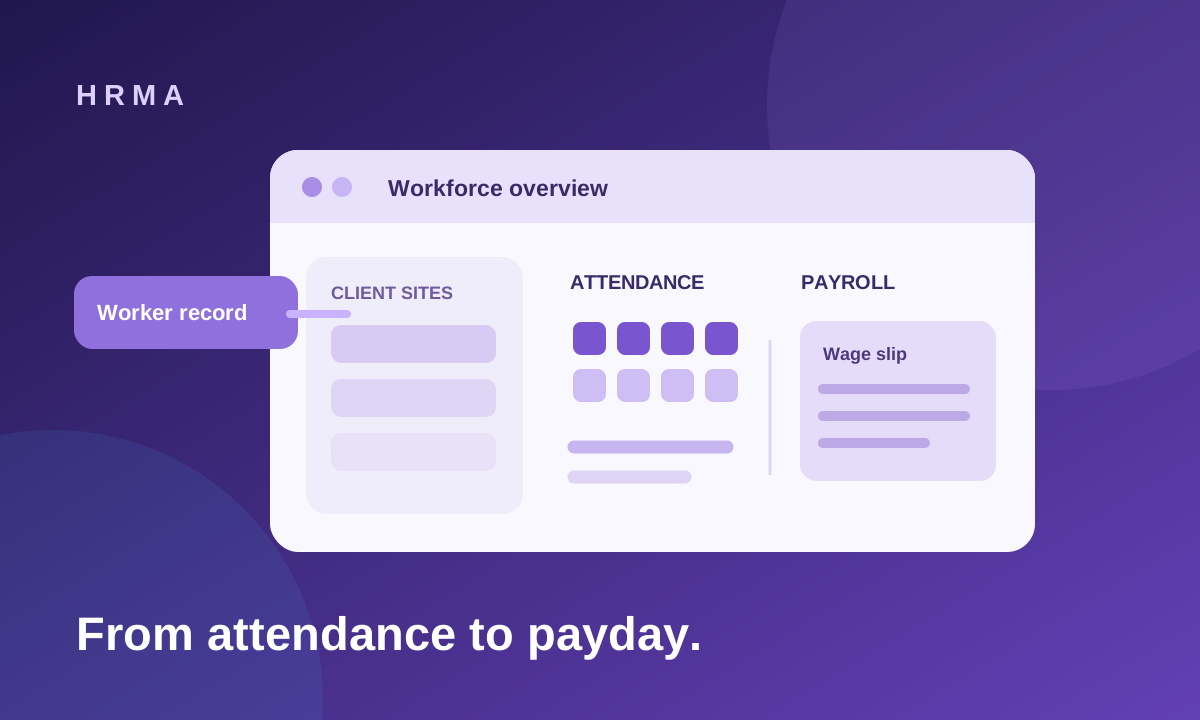
HRMA connects employee records, client sites, attendance, salary structures, payroll, wage slips and downloadable reports. It also supports configurable components and effective-dated rules, plus Excel and Word templates for business-specific forms where supported.
Treat compliance records as prepared evidence
PF, ESI, professional tax and other reports are valuable only when their source data and settings are correct. Different client sites and workers can have different requirements. Verification services also depend on active provider credentials and the data returned by those providers.
Use generated records as a structured starting point for review and filing. Check calculations, current rules and document formats against the requirements that apply to your organization and client site. Software can make the work more consistent; it cannot replace that review.
A useful evaluation checklist
- Can the system show which site a worker belonged to for a given period?
- Can attendance and payroll be reviewed together before finalizing a month?
- Can you explain every major earning and deduction on a wage slip?
- Can your team prepare the client and statutory records it actually uses?
If those answers are clear, month-end becomes a repeatable process rather than a hunt through files. Explore HRMA for manpower payroll and workforce records to see the workflow in detail.